The after-daycare stretch · Ages 1–3
After-daycare routine
for toddlers
Home at last. Now, one small step at a time.
Start with a warm hello, check hunger and tiredness, leave space for simple play, then move toward dinner and your usual bedtime routine. Change the order when your child needs something sooner.
Find your starting point
A starting point for tonight
A familiar order.
Room to change it.
These are practical suggestions to adapt, not a timed program or a promise of a tear-free evening.
01 · Reconnect
Make the hello enough.
Put the bags down, get close, and say something simple: “I’m here. It’s good to see you.” Offer a cuddle if it is welcome, or sit nearby. Questions about the day can wait.
Some children want contact; others want space with you still available. A calm voice and attention can help you support a stressed child. AAP guidance on connection
“You want me close. I can sit right here.”
02 · Check hunger
Fit the food to the evening.
At pickup, ask when your child last ate and how much they seemed to want. At home, check hunger, thirst, diaper or toilet needs, and tiredness before adding more demands.
- Dinner is nearly ready: serve it earlier, or offer a suitable part of it first.
- Dinner is farther away: offer a familiar snack, such as plain pasteurized yogurt with soft mashed fruit, if suitable for your child.
- They are not hungry: offer water and continue gently toward the next usual meal.
Start with a small offer and respond to hunger and fullness. Avoid bargaining over bites or making food depend on being cheerful. Regular food offers without pressure are supported by the AAP’s feeding guidance. The NHS advises against delaying meals until children are too hungry or tired.
For every snack and meal: seat your child upright and stay with them. Prepare food for their eating skills and allergies. Avoid eating while walking, in a car, or in a stroller. CDC choking-prevention guidance
03 · Leave room for play
One familiar thing is plenty.
Offer a board book, a few large age-appropriate blocks, or a teddy to tuck in together. Follow what your child is already interested in. You do not need to introduce a new activity every afternoon.
Watching, repeating the same game, or declining are all fine ways to respond to an invitation. Skip planned play if food, comfort, or rest is what the evening needs.
“Teddy is here if you want to put him to bed.”
04 · Ease into the evening
Make the next step easy to see.
Try one short cue: “First we wash hands, then dinner. I’ll help.” After dinner, use your family’s familiar wind-down, such as getting ready for bed and sharing a book.
Predictable meal, play, and bedtime routines give toddlers a sense of what comes next. Keep the sequence flexible enough for that day’s needs. AAP guidance on toddler routines
For yourself, choose one useful preparation for tomorrow: set out breakfast ingredients, check a daycare bag, or ask another caregiver to take one task.
Adjust for your child
The same idea, a little different.
These examples adapt the same flexible sequence for different stages. Use what fits your child today; the age bands are not skill deadlines.
- 12–18 months
- Help with one small step: “Shoes off.” Share a board book or roll a large soft ball together.
- 18–24 months
- Try one manageable choice: “Lap or beside me?” If choosing adds frustration, offer help instead.
- 2–3 years
- Name the next step, then leave room for a tiny teddy story, drawing together, or familiar pretend play.
When the evening gets difficult
Make the plan smaller.
What if my toddler melts down before we even get inside?
Focus on getting somewhere safe, staying nearby, and checking immediate needs. Use fewer words. A cuddle is an offer, not a requirement. If hitting starts, calmly prevent harm: “I won’t let you hit.” Save teaching and questions for a more receptive moment. More on supporting a stressed child
What if they refuse dinner after asking for food?
Keep the offer calm, with something familiar alongside the meal. Let your child decide whether and how much to eat from what you offer. Avoid pressure or a “one more bite” bargain. More on low-pressure feeding
If you are concerned about growth, pain, or ongoing eating difficulties, ask your child’s health professional for individual advice.
What if pickup is late and I am exhausted too?
Go straight to a familiar, manageable dinner and the essential bedtime steps. Planned play can wait. Ask for one specific piece of help if someone is available: “Could you handle pajamas while I clear the table?”
One possible evening
Home, hungry, and dinner is not ready.
- Say hello and help with the transition. Put down the bags, help with shoes, and wash hands together.
- Sit together for a familiar snack. Offer water and a suitable food you already have.
- Follow their energy. Share a book or let them choose familiar play while you stay nearby. If they need you, keep it to company.
- Offer dinner, then wind down. Keep your usual sequence and drop anything optional.
This is an adaptable example, not a schedule to finish. If dinner is ready, begin there.
A genuine look inside
Less planning.
A place to start.
The After-Daycare Plan brings ready-made weeks, shopping lists, recipes, and optional play together in one age-specific digital guide.
These are two complete pages from the 2–3 years A4 edition: a Rescue week and one page of its dinner shopping list. Open either image to read it at full size.
The images are previews; their printed navigation buttons are not interactive here. The guide includes linked A4 and phone-friendly PDFs.
Explore the age editionsDigital download · No physical book or cards
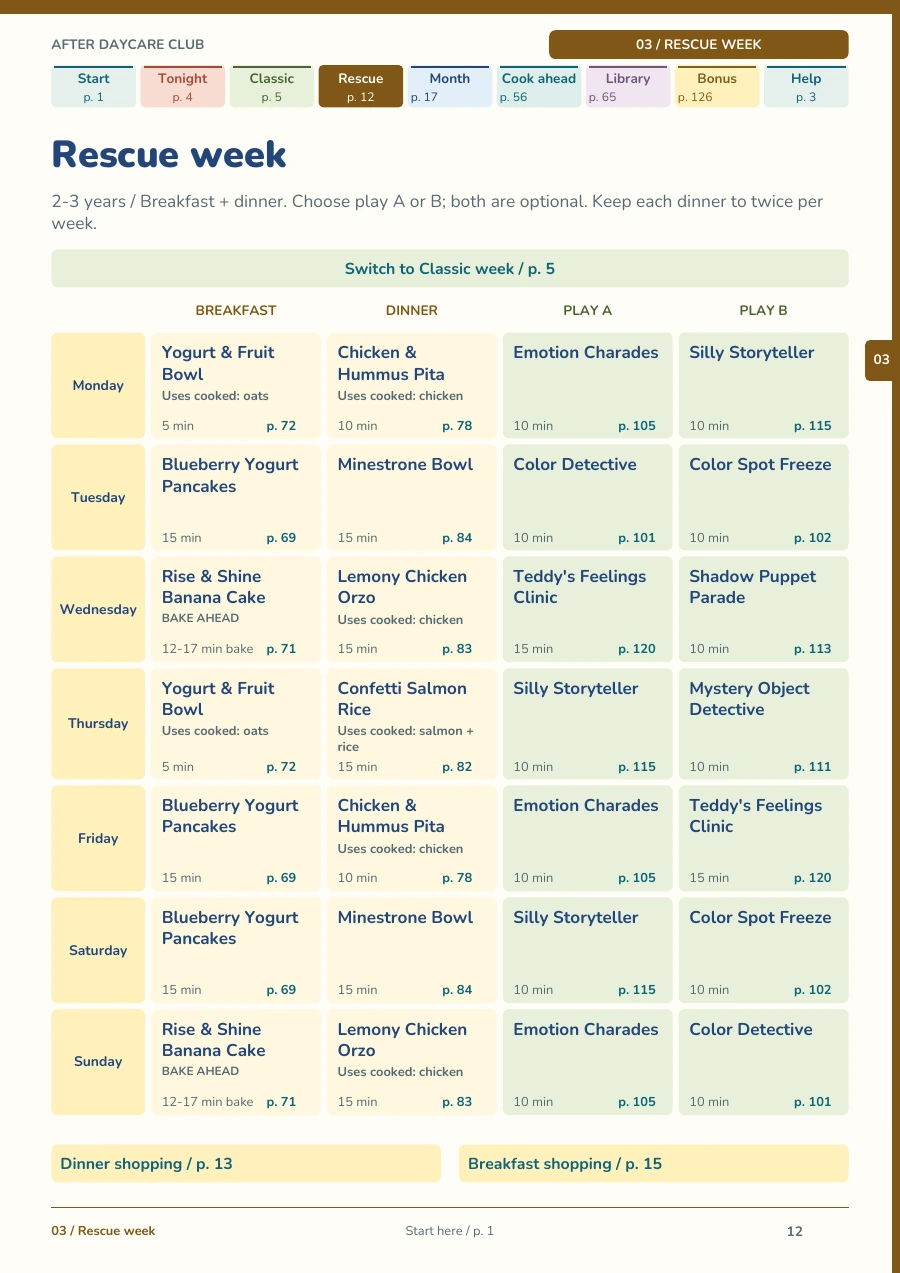 Rescue week
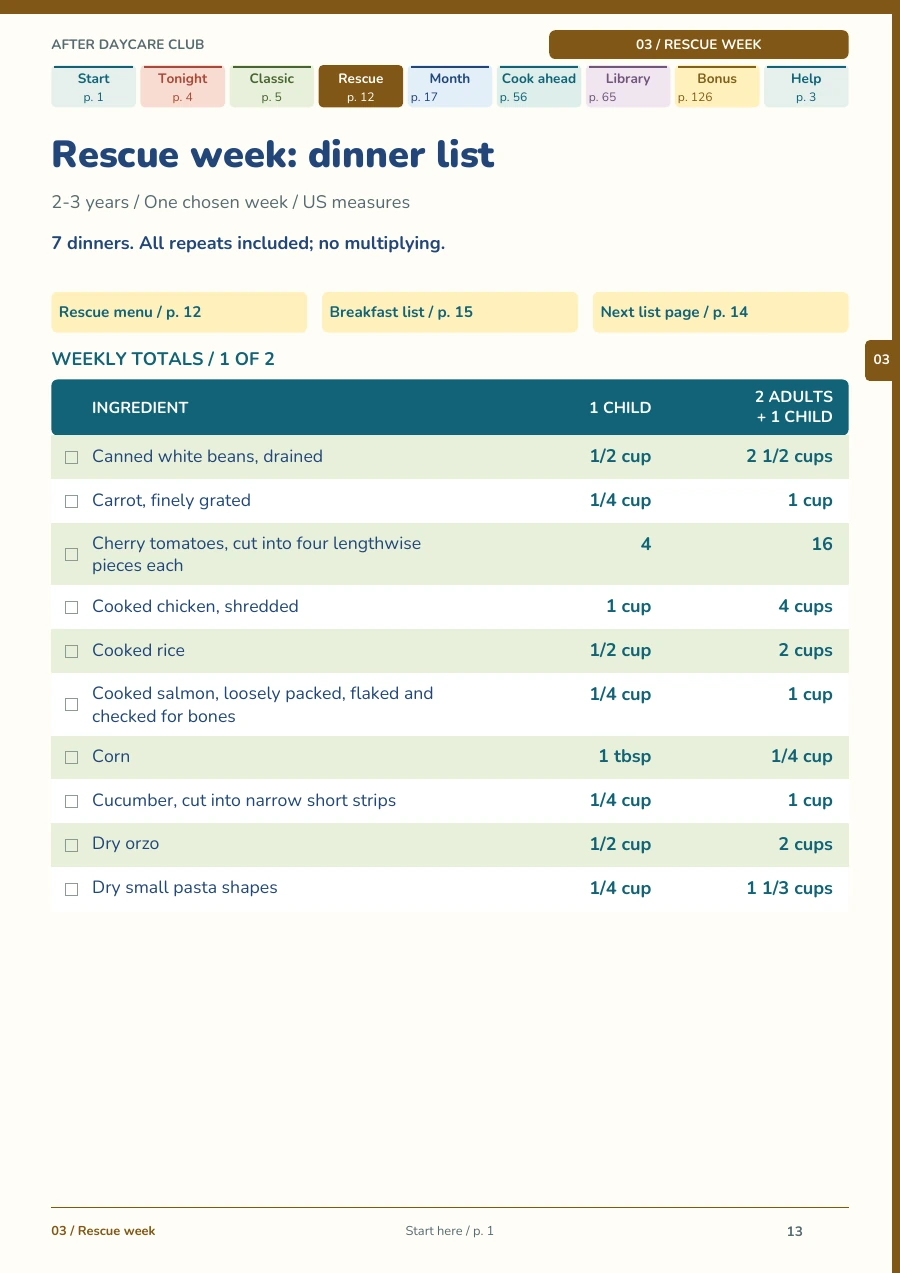 Dinner shopping list